Maybe.
I want very much to say yes to this, and it is certainly possible. However, there are a lot of myths, misconceptions, and hearsay, plus a lack of actual evidence that mean that we don’t really know for sure.
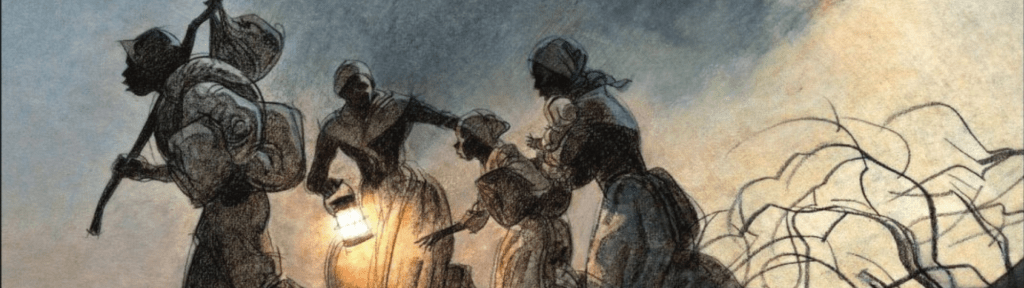
First, as a teacher, I must address a couple of misconceptions that are a bit of a frustration when it comes to this topic. The Underground Railroad was neither underground, nor a railroad. Talk amongst yourselves! Both of those terms are figurative. Although travel did often follow railroad lines (as well as creeks and rivers), the term “railroad” is an analogy for the transportation of escaped slaves, mostly on foot or by wagon, helping them move them from stop to stop (referred to as “stations”) across state lines to freedom. “Underground” refers to the secretive, hidden nature of the undertaking because it was not legal to help an escaped slave. At times hiding and travel may have included some underground passages, but the majority of travel was above ground under the cover of night. A lot of the questions we get are related to these misconceptions.
We have yet to find the actual evidence to prove the home was a station. There are many print references that do make this claim, although their basis for the conclusion is seldom given. Here are the references we have uncovered to date. (Click images to enlarge.)
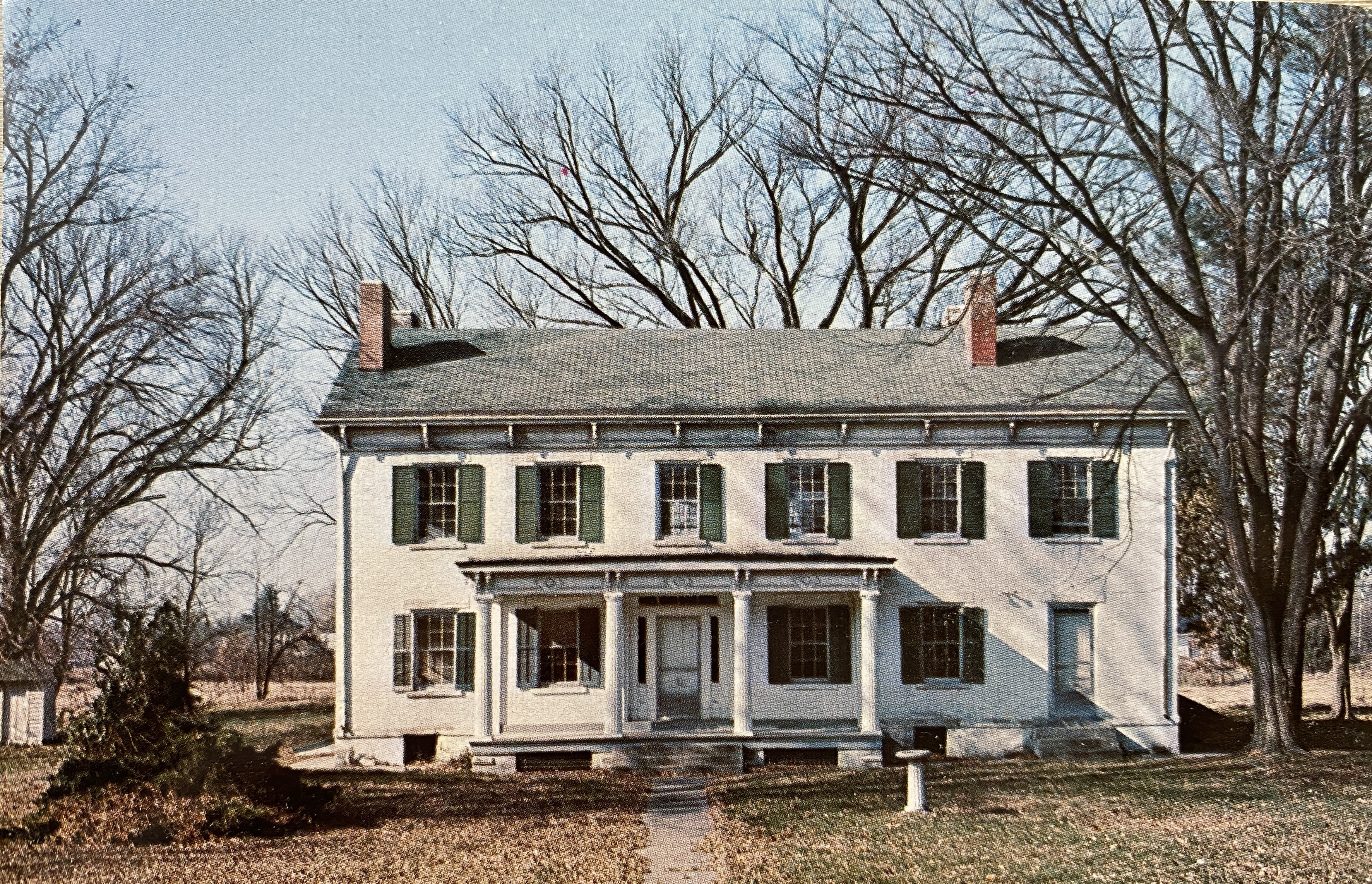
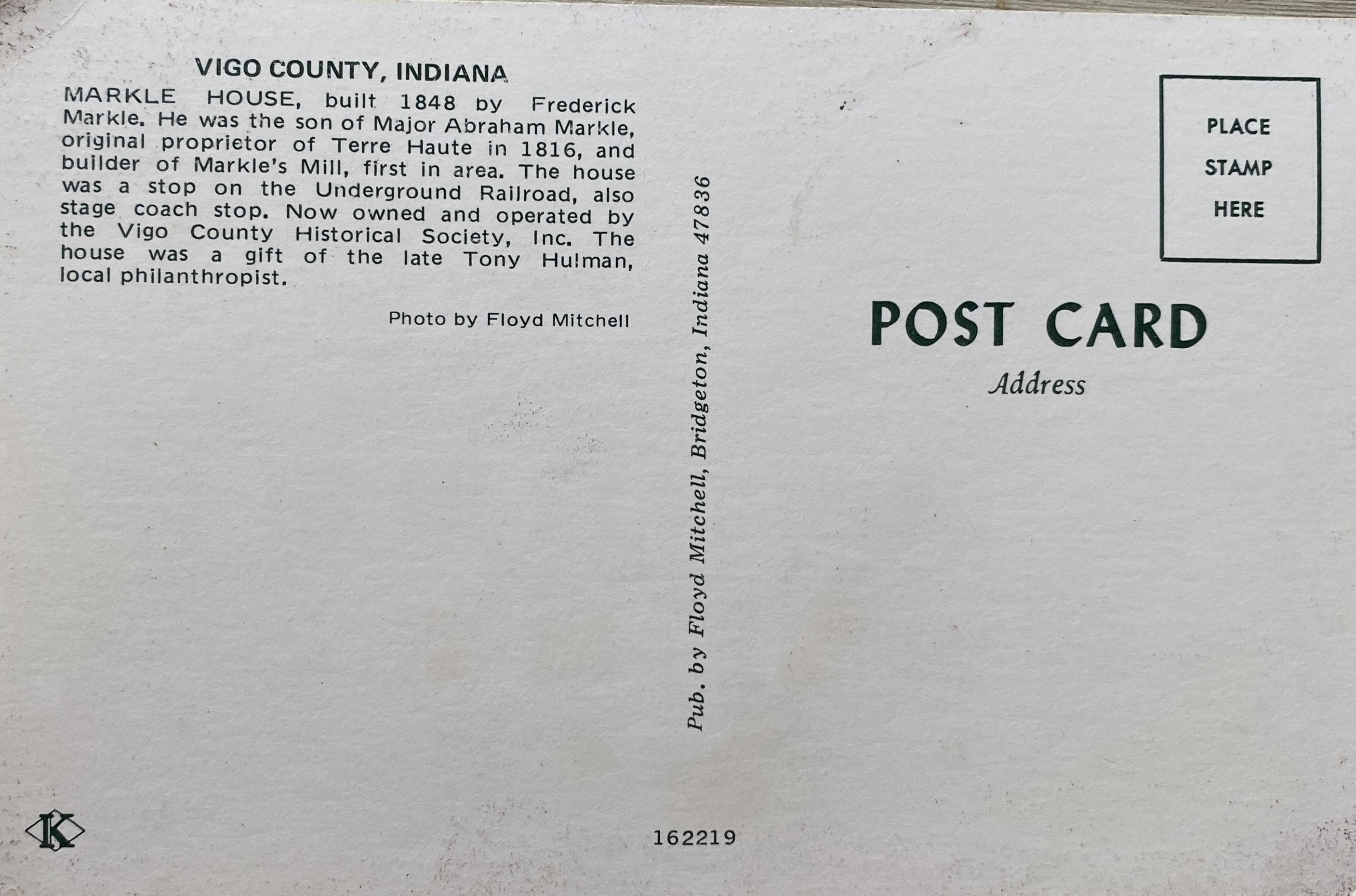
Read about this postcard in our artifact gallery.

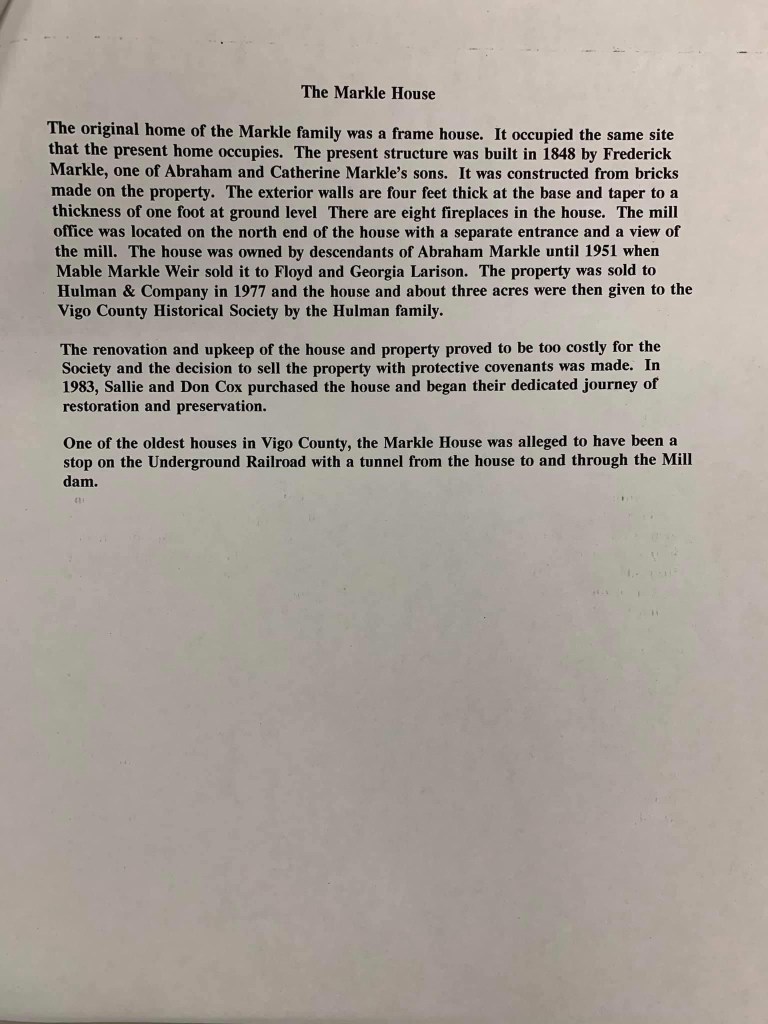
The source above from the Vigo County Historical Society states it is “alleged” to have been a stop and mentions a tunnel believed to have connected the house to the mill, and through the dam. I’ve read that there were tunnels at the mill site, built for maintenance purposes, that may have been used to hide slaves. There has not been any evidence found of this or any other tunnels on the house side of the road. When we had fiber optic cable installed, Joink was nervous about trenching for fear of disrupting historical tunnels. We chose to have them proceed with caution – fairly certain that the tunnels are only local legend and knowing that if anything was uncovered it would be evidence long searched for. There was no indication of tunnels found.
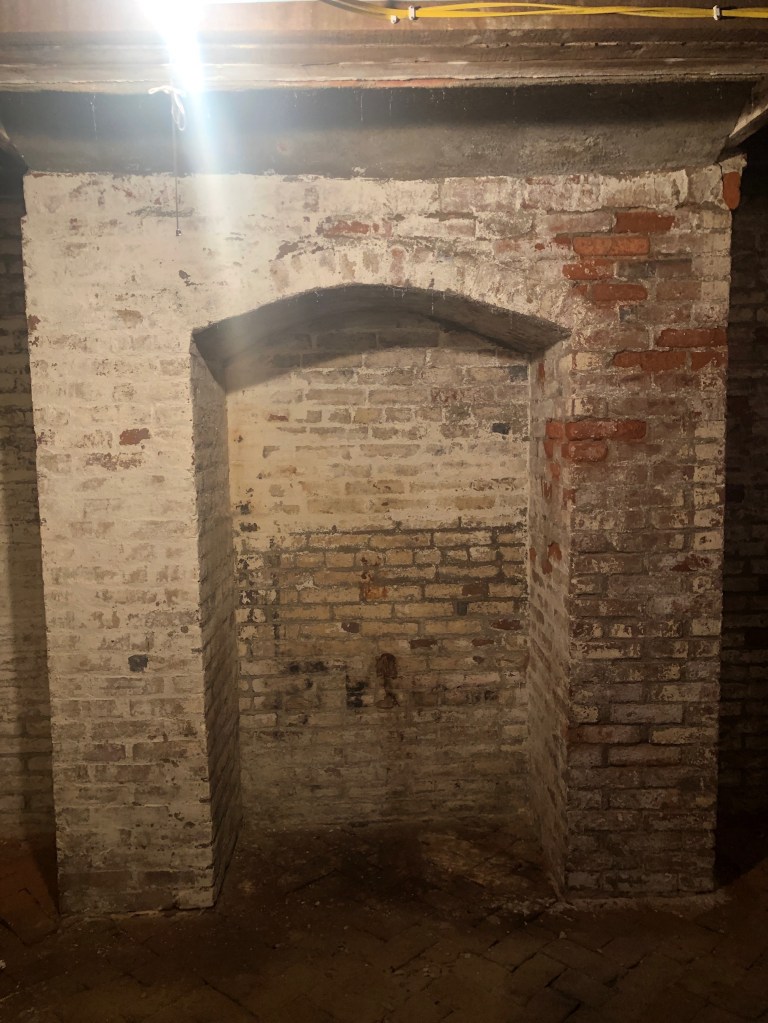
The basement of the home has four of these brick arch frames that look like doorways. Many people think these are sealed-off secret entrances (from the afore mentioned tunnels). Sadly, these little alcoves have nothing to do with the Underground Railroad. These are structural support for the fireplaces above them. The home has four full chimneys for eight fireplaces, stacked directly above these arches on the first and second floors. They are not on external walls, so they would not even have worked as secret entrances.
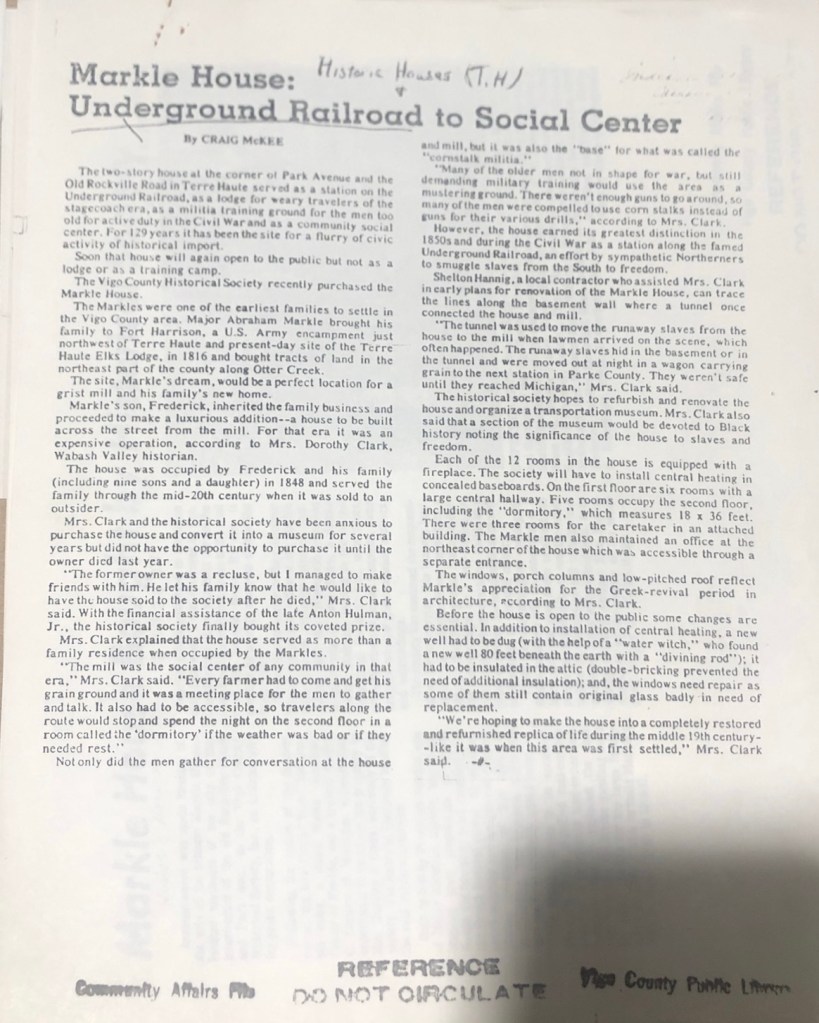
This article by Craig McKee (found in the Vigo County Historical Society archives) provides the most detail and the only actual hint of evidence we’ve found so far. It states that a local contractor, who assisted Dorothy Clark in her efforts to renovate the house along with the Historical Society, could “trace lines along the basement wall where a tunnel once connected the house and the mill.” This would be amazing to find… but we can’t. We do not see any lines where it looks like bricks have been removed or replaced along the basement walls. The walls are painted, which may be hiding such lines, but the paint is very worn. We feel this would be evident if it were accurate.
Brendan Kearns has done a good deal of investigating this topic and shares his research and documentation in this terrific post – well worth your time if you’re interested in further evidence .(or rather the lack of it) concerning tunnels from the mill to the house.
The lack of actual evidence certainly does not mean the house wasn’t part of the Underground Railroad – there just isn’t any proof we’ve found that it was. It is certainly plausible that the house could have sheltered some slaves, perhaps even likely. It’s is certainly a big enough house with many entry/exit points that could have been used without tunnels. But for me, his remains a mystery. I hope this home played a role in helping those treated so inhumanely find freedom and a new life. It’s a logical conclusion, but I can’t quite claim it is an irrefutable fact.

If anyone does have any additional forms of documentation on this matter, we’d love to see it! Post a comment below or visit our contact page!


6 responses to “Was the house part of the Underground Railroad?”
John Caldwell wrote an article for the Terre Haute Star on July 8 in either 1920 or 1930 (my post notes disagree with my bibliography). He refers to “rumors of secret passageways and hidden rooms that were only opened at night”. My grandmother, Mildred Hansel Andrews (daughter of Charles Hansel), told me that a settlement of black people east of the mill had been there since the Civil War. Her direct knowledge would not extend before 1910 when her father leased the mill (prior to purchasing it.) I know it was still there in the 1970s. This information is far from conclusive.
LikeLiked by 1 person
I think it is so neat that you are a descendant of Charles Hansel! Is that what first drew you into researching and documenting the mill? I believe you’re referring to the “Lost Creek Settlement”, which is very nearby – just a few miles Southeast of the mill and does indeed date back to the Civil War. Also, I tried finding the article you referenced in the newspapers.com database, but didn’t have any luck.
LikeLike
Yes, my grandmother’s stories about the mill got me interested. I also have an attraction to waterfalls and the dam on Otter Creek is as close as you get in Vigo County.
Is the Lost Creek Settlement still there? Do you know of a place where I can find more information about it?
LikeLike
Grandparent stories shared are the best and can lead us to some great interests and hobbies. We have a few that have grown from that as well. I haven’t gotten this info added to the site yet, but you can read more about the Lost Creek here: https://lost-creek.org/genealogy/index.php There is a marker at the corner of Hunt Road and E. Debney Ave: https://marklehouse.files.wordpress.com/2023/02/undergroundrr-lost-creek.jpeg
LikeLike
Wow. There is a lot to digest here. Thank you for these links.
LikeLiked by 1 person
Thanks for the link about the Lost Creek Settlement. I updated my History of Markels Mill
LikeLiked by 1 person